


If you want to increase earnings from your online content, an affiliate marketing strategy is a great place to start.
Amazon hosts one of the most popular affiliate marketing programs, with nearly half of the entire affiliate network market. With more than 900,000 affiliate partners, the Amazon Associates program helps content creators, publishers, and bloggers monetize their traffic.
Research shows that Amazon is the first destination for most shoppers. With such a strong brand presence, sending people from your content to Amazon product pages could result in higher conversion rates.
What is affiliate marketing?
Affiliate marketing programs like Amazon’s are basically arrangements in which an online merchant like Amazon pays website commissions to send them traffic and/or sales.
Affiliate sites link to the product site and are paid according to the agreements.
There are several benefits to affiliate marketing for both the affiliates and product owners (also known as merchants).
For the merchant, it’s an opportunity to expand their reach and increase sales through affordable marketing.
Because affiliate marketing is performance-based, affiliates are paid only when the desired action takes place.
For affiliates, these programs provide an opportunity to become involved in e-commerce without having to establish or maintain their own store. It also provides the opportunity to monetize a website, blog, or social media and earn a commission.

Types of affiliate marketing
- Pay-per-sale: In this type of program, the merchant pays an affiliate when the affiliate sends a customer who makes a purchase. Some merchants pay the affiliate a fixed rate per sale, while others pay a percentage of the sale.
- Pay-per-click: In this arrangement, the affiliate is paid based on how many visitors arrive at the merchant’s site via the affiliate link, and the affiliate is paid regardless of whether visitors make a purchase.
- Pay-per-lead: This type of program pays affiliates based on the number of visitors to the merchant’s site who sign up as leads or fill out the requested information on the website.
What is Amazon affiliate marketing?
Amazon affiliate marketing is a commission-based program that allows individuals and businesses to earn money by recommending Amazon products to their audience. After joining the Amazon Associates program, affiliates can generate unique tracking links for specific products and share them across blogs, websites, YouTube videos, newsletters, or social media platforms.
When someone clicks one of these links and completes a purchase, the affiliate earns a percentage of the sale. Amazon handles everything behind the scenes, such as tracking clicks, purchases, calculating commissions and issuing payouts. This is what makes affiliate marketing on Amazon so appealing: creators can monetize content without worrying about logistics like payments, fulfillment, or customer service.
Because Amazon offers millions of products across virtually every category, affiliates have the flexibility to recommend items that genuinely align with their niche and audience. That alignment is often what drives trust and ultimately, conversions.
Amazon affiliate program for brands
If you’re new to affiliate programs, it helps to look at things from the seller’s perspective as well. At a high level, affiliate marketing is a performance-based partnership: someone promotes your product, and you reward them when their promotion leads to a sale.
Here’s how affiliate marketing Amazon works for brands selling on the platform:
First, sellers list their products on Amazon as usual. There’s no special setup required to “enable” affiliates, your listings automatically become eligible for promotion.
Next, approved Amazon Associates generate custom affiliate links tied to specific products. Each link is unique, allowing Amazon to track exactly which affiliate drove the traffic and sale.
Affiliates then promote those links in ways that fit their audience and platform. This could be a product mention in a blog post, a recommendation in a YouTube video description, or a quick shoutout on social media. All promotions must follow FTC disclosure guidelines, ensuring transparency with audiences.
When a visitor clicks an affiliate link, they’re taken directly to the product’s Amazon listing. If they make a purchase within Amazon’s 24-hour cookie window, the affiliate earns a commission on that order.
The result is a win-win-win model. Sellers benefit from off-platform exposure and incremental sales without upfront marketing costs. Affiliates earn commissions for content they’ve already created. And Amazon gains more traffic and revenue through trusted third-party recommendations. That’s why affiliate marketing Amazon continues to scale so effectively.

Amazon affiliate program for merchants
The Amazon affiliate program is designed to be approachable, even if you’re completely new to performance-based marketing. Whether you’re a brand owner or managing a storefront on Amazon, understanding how the process works helps you see why affiliate marketing Amazon is so effective at driving external traffic and sales.
Here’s a clear, step-by-step look at how the program works from the affiliate and merchant ecosystem standpoint.
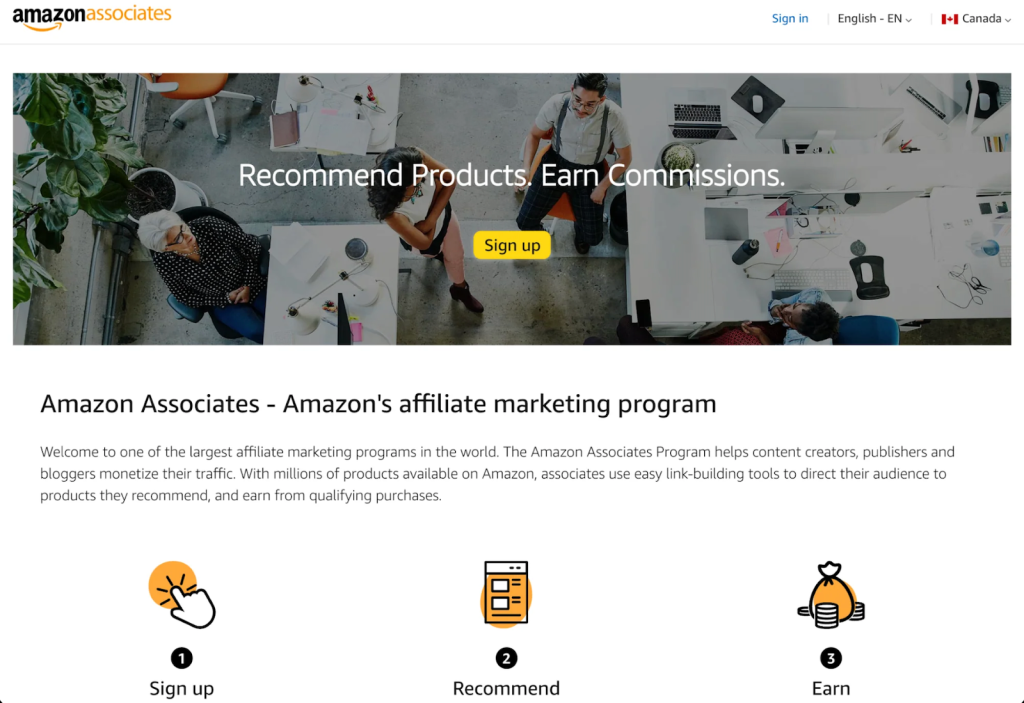
1. Sign up
Getting started begins in the Amazon Associates dashboard. You can sign in using an existing Amazon account or create a new one specifically for business use. Many creators prefer setting up a separate account to keep personal and professional activity organized, especially if they plan to scale their affiliate efforts over time.
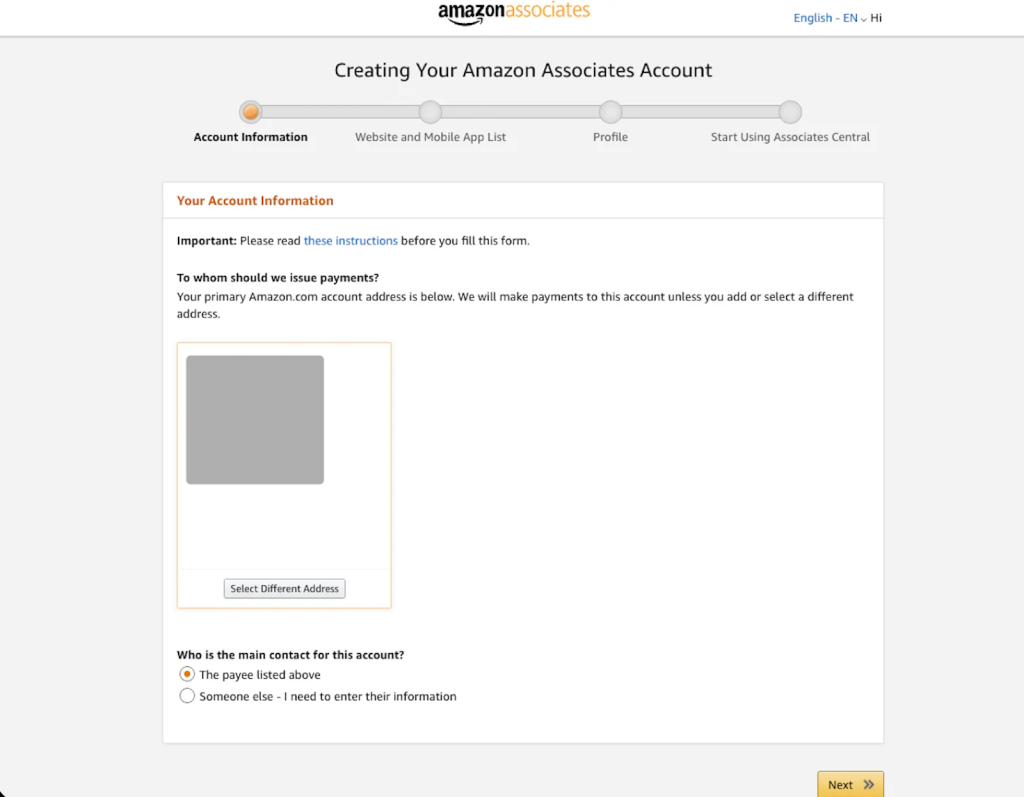
2. Share your basic details
Next, Amazon asks for essential information about you and your affiliate presence. This includes contact details and a short overview of how you plan to participate in affiliate marketing with Amazon. These details allow Amazon to track performance accurately and ensure commissions are credited correctly.
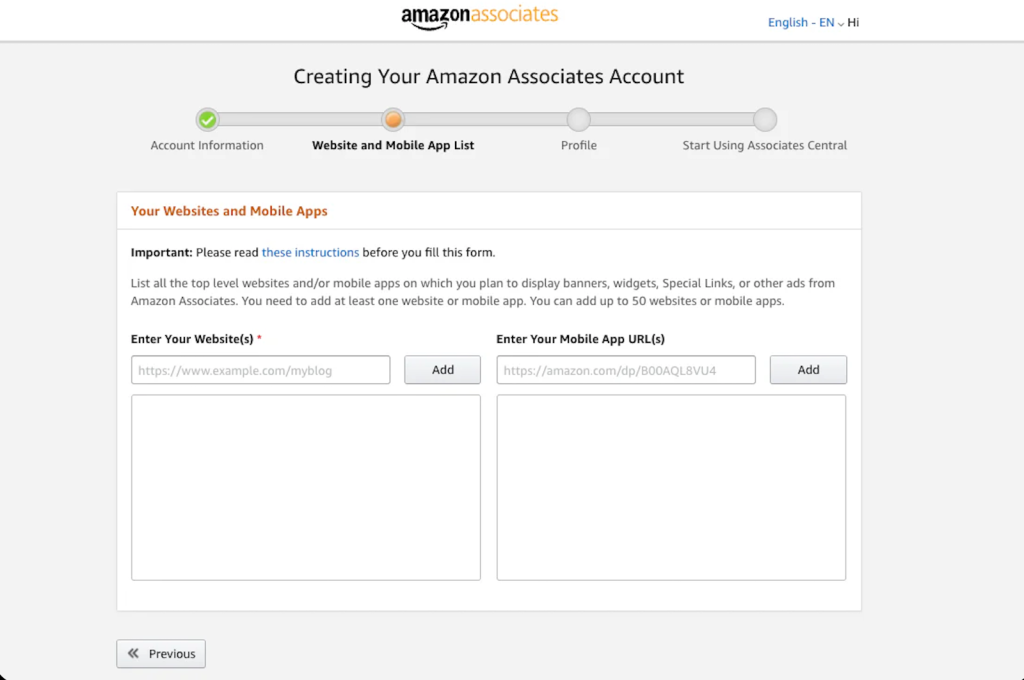
3. Add your digital properties
Affiliates can register multiple platforms where links will be shared, including websites, mobile apps, and YouTube channels. You can list several properties at once, which is useful if you publish content across different channels.
Amazon also checks whether your platform is directed at children under 13. Properties aimed at younger audiences aren’t eligible for the program, so this step helps Amazon stay compliant with regulations.
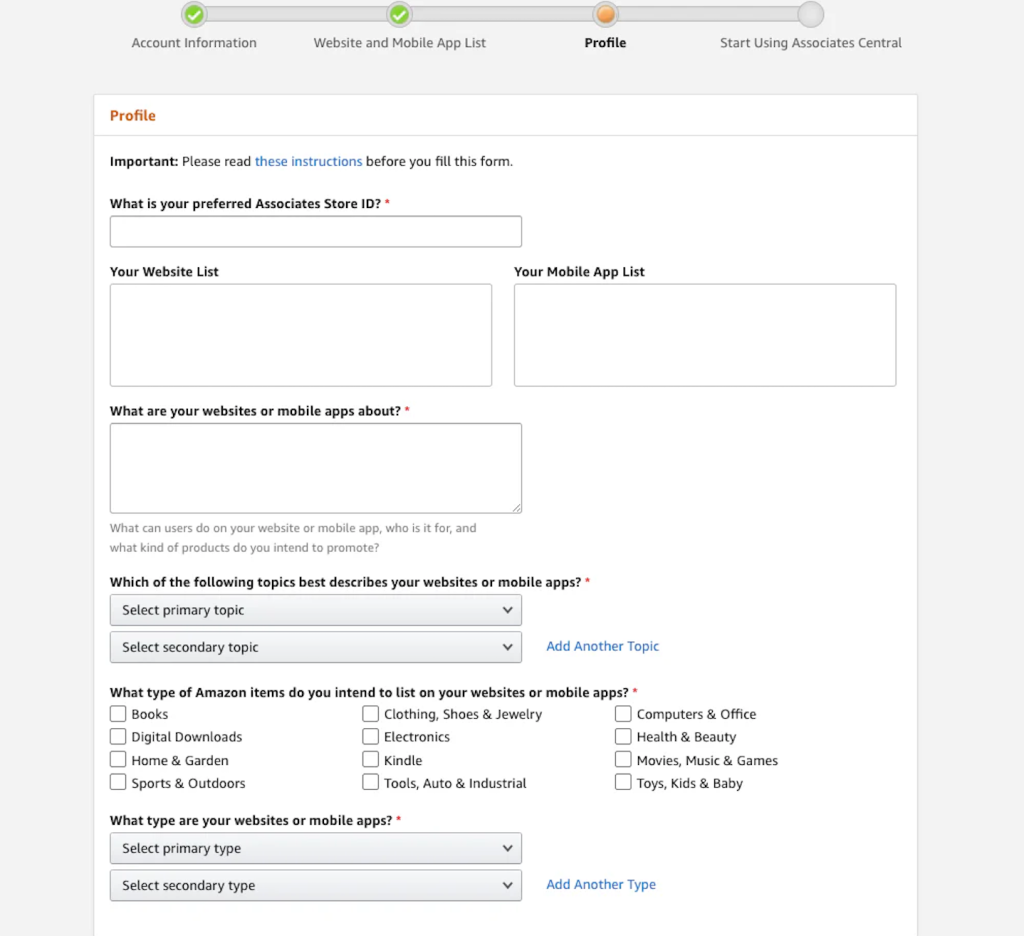
4. Build your affiliate profile
This stage focuses on your content and promotional approach. You’ll create a store ID, which acts as a unique identifier tied to your affiliate links. Every sale generated through those links is attributed back to this ID, making it easier to track performance across campaigns.
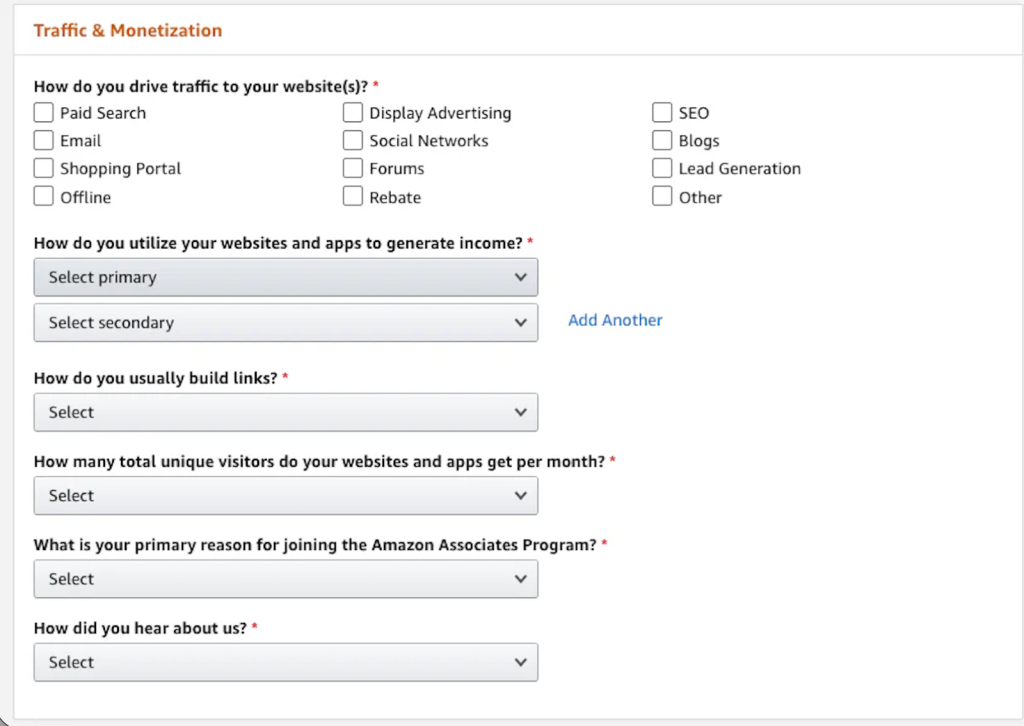
5. Explain how you drive traffic
Amazon then asks how visitors find your content. You’ll select traffic sources such as search engines, social media, email, or paid advertising, and provide a snapshot of your audience size and monetization strategy.
This information gives Amazon context on how affiliates contribute to the broader affiliate marketing Amazon ecosystem and ensures quality standards across the network.
6. Add tax and payment information
Once the application is complete, affiliates submit tax details and choose a payout method. Available options typically include direct deposit, Amazon gift cards, or mailed checks.
Payments are issued monthly, but there’s a delay of about 60 days after the month in which commissions are earned. This buffer allows Amazon to account for returns or order changes before finalizing payouts.
7. Create and manage affiliate links
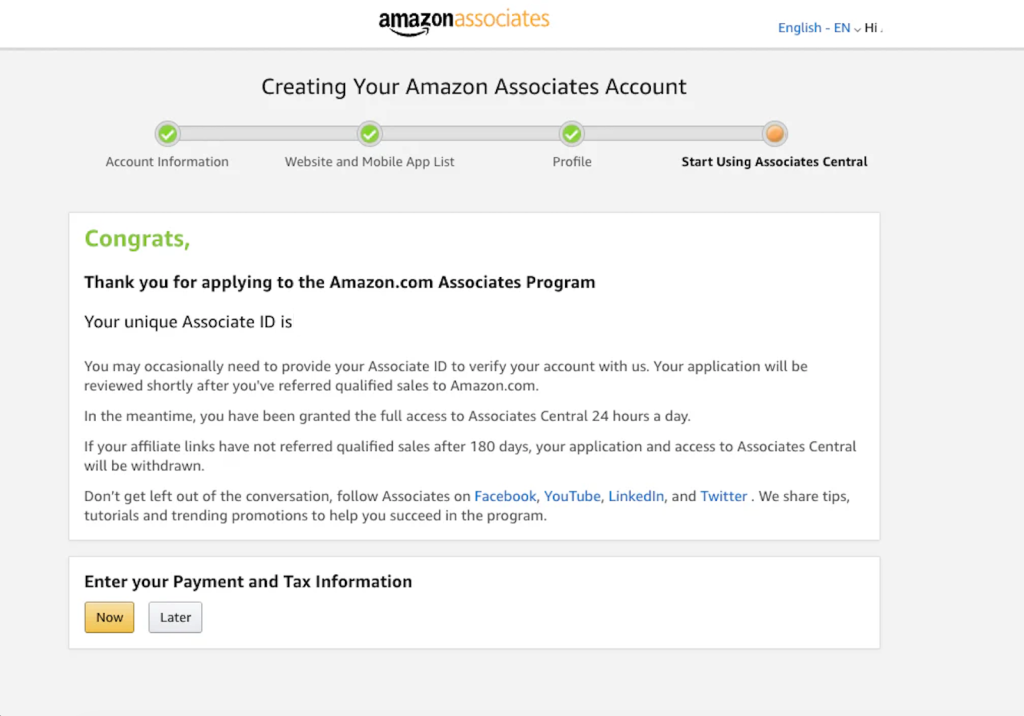
After approval, affiliates gain full access to Associates Central, where they can generate custom product links. Each link contains the affiliate’s unique ID, ensuring commissions are tracked correctly.
Affiliates can create links directly from the dashboard by searching for products or use built-in tools for faster link generation.
Every link must include the correct Associate ID to earn commissions. This final step brings the entire affiliate marketing Amazon process to life, connecting content, traffic, and sales in a single, trackable system.

Amazon affiliate program requirements
Joining Amazon’s affiliate network comes with specific rules and expectations to maintain quality across the platform:
- Websites must be public and have at least 10 original, up-to-date posts published in the past 60 days.
- Mobile apps need to be freely available in Google Play, Apple App Store, or Amazon Appstore.
- Social media channels such as Facebook, Instagram, Twitter, YouTube, TikTok, and Twitch are supported, with a recommended minimum of around 500 engaged followers.
Amazon also requires that affiliates make at least three qualifying sales within the first 180 days. This ensures new partners are actively driving traffic and contributing to the network’s performance.
Common reasons for rejection
Affiliate applications can be denied if they don’t meet program standards. The most frequent issues include:
- Fewer than three qualifying sales in the first 180 days
- Insufficient original content that provides a unique perspective
- Incorrect use of affiliate links
- Non-compliant content or practices
By meeting Amazon’s content, traffic, and compliance requirements, affiliates can build a sustainable revenue stream through affiliate marketing Amazon, while sellers gain expanded exposure without extra marketing effort.
Amazon affiliate commission rates in 2026
Commission rates differ depending on the type of product. Some of the highest-paying categories include:
- Luxury beauty, luxury stores beauty, Amazon Explore: 10%
- Digital music, physical music, handmade, digital videos: 5%
- Physical books, kitchen, automotive: 4.5%
- Amazon Fire tablets, Kindle devices, Amazon Fashion women’s, Echo devices, Ring devices, watches, jewelry, luggage, shoes, handbags, and accessories: 4%
Beyond these standard rates, there are opportunities to boost earnings:
- Amazon Bounty program: Earn fixed fees ($3–$25) for customer sign-ups to services like Prime or Audible.
- Seasonal promotions: Prime Day, Black Friday, and other events often increase commission rates temporarily.
- Special product launches: Newly released items sometimes carry higher short-term commissions.
By promoting strategic products, affiliates can maximize earnings while delivering genuine value to their audience.
Are you ready to start your program?
Amazon affiliate marketing isn’t just a way to earn passive income, it’s a strategic tool that connects content creators, brands, and shoppers in a single ecosystem.
For merchants, it provides a low-risk channel to extend visibility beyond Amazon’s platform without extra advertising costs.
For affiliates, it’s an opportunity to monetize influence and expertise by recommending products that genuinely align with their audience.
Ultimately, success in Amazon affiliate marketing isn’t just about linking products; it’s about understanding your audience, providing real value, and creating content that inspires trust.
Done correctly, it can become a reliable revenue stream that complements any online presence.